
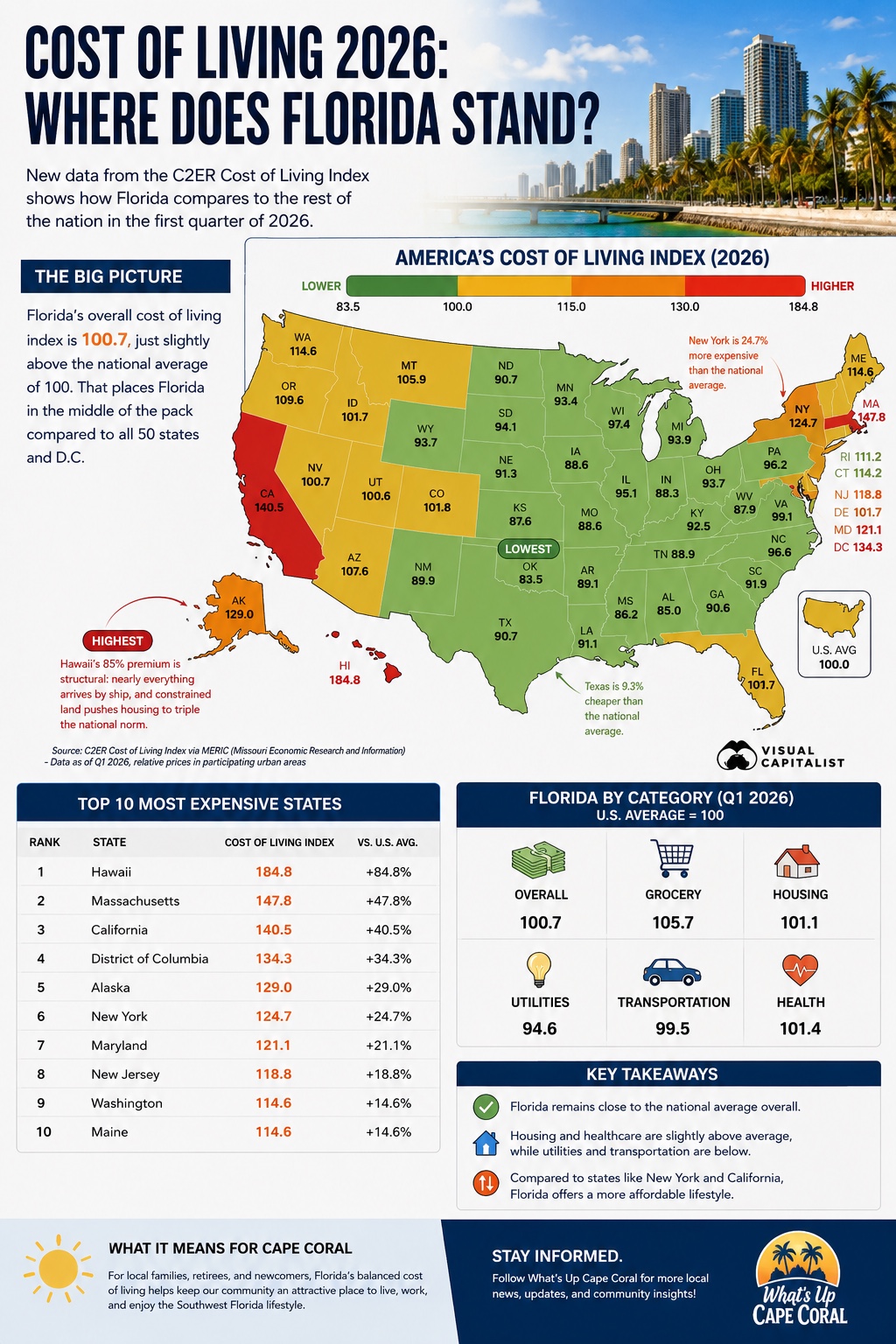
Florida is often discussed as either an affordable alternative to the Northeast and West Coast or a place where rising costs have erased that advantage. The newest figures land somewhere in the middle: Florida’s overall cost-of-living index is 100.7, only 0.7% above the national benchmark of 100.
That puts the state near the middle of the country—not among the least expensive places to live, but far below high-cost states such as Hawaii, Massachusetts, California and New York.
The national picture
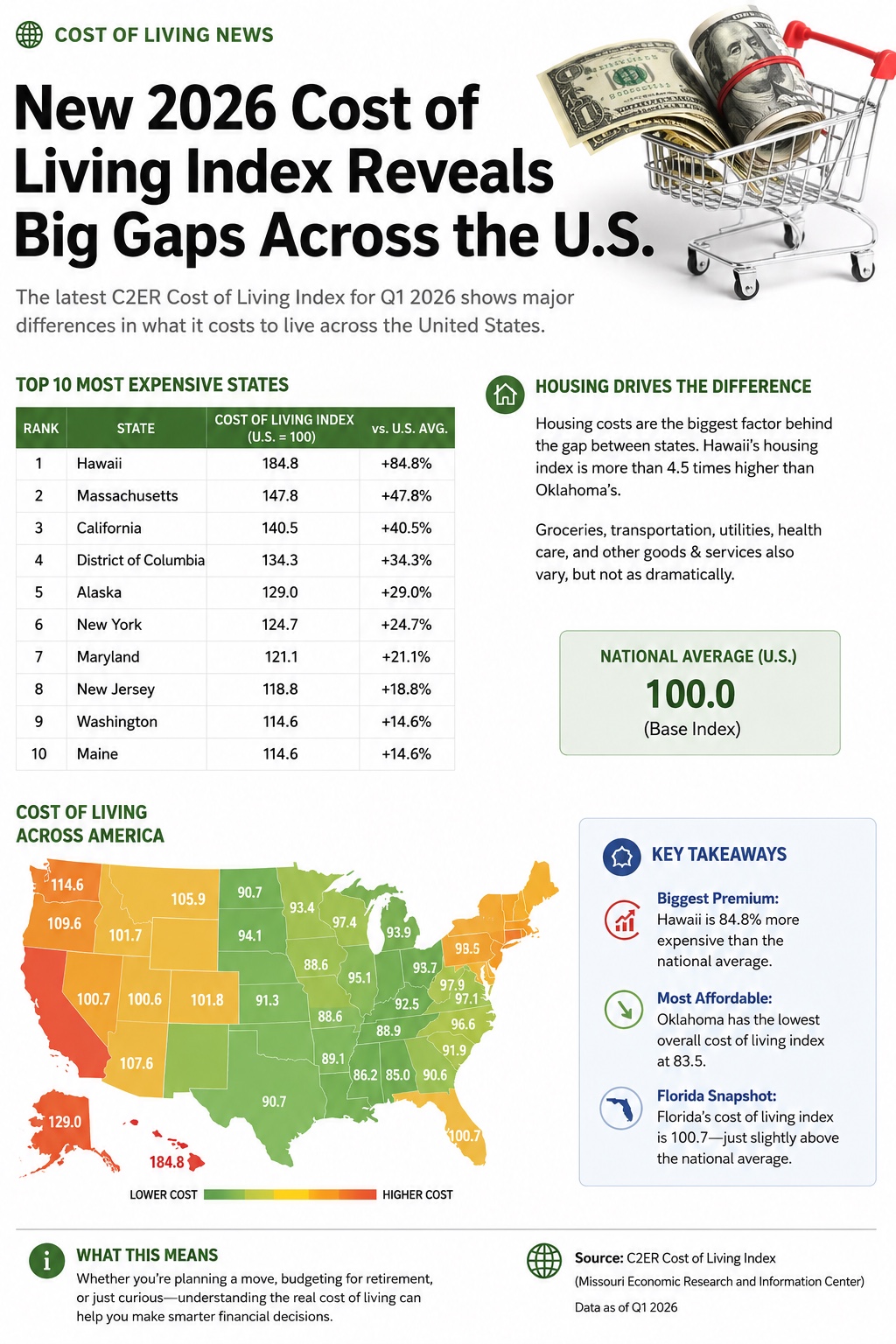
The 2026 comparison shows a wide gap between states. Hawaii tops the list at 184.8, while Oklahoma is the lowest at 83.5. Housing is the biggest reason those totals vary so dramatically, although groceries, utilities, transportation and health care all contribute.
Groceries are Florida’s standout expense
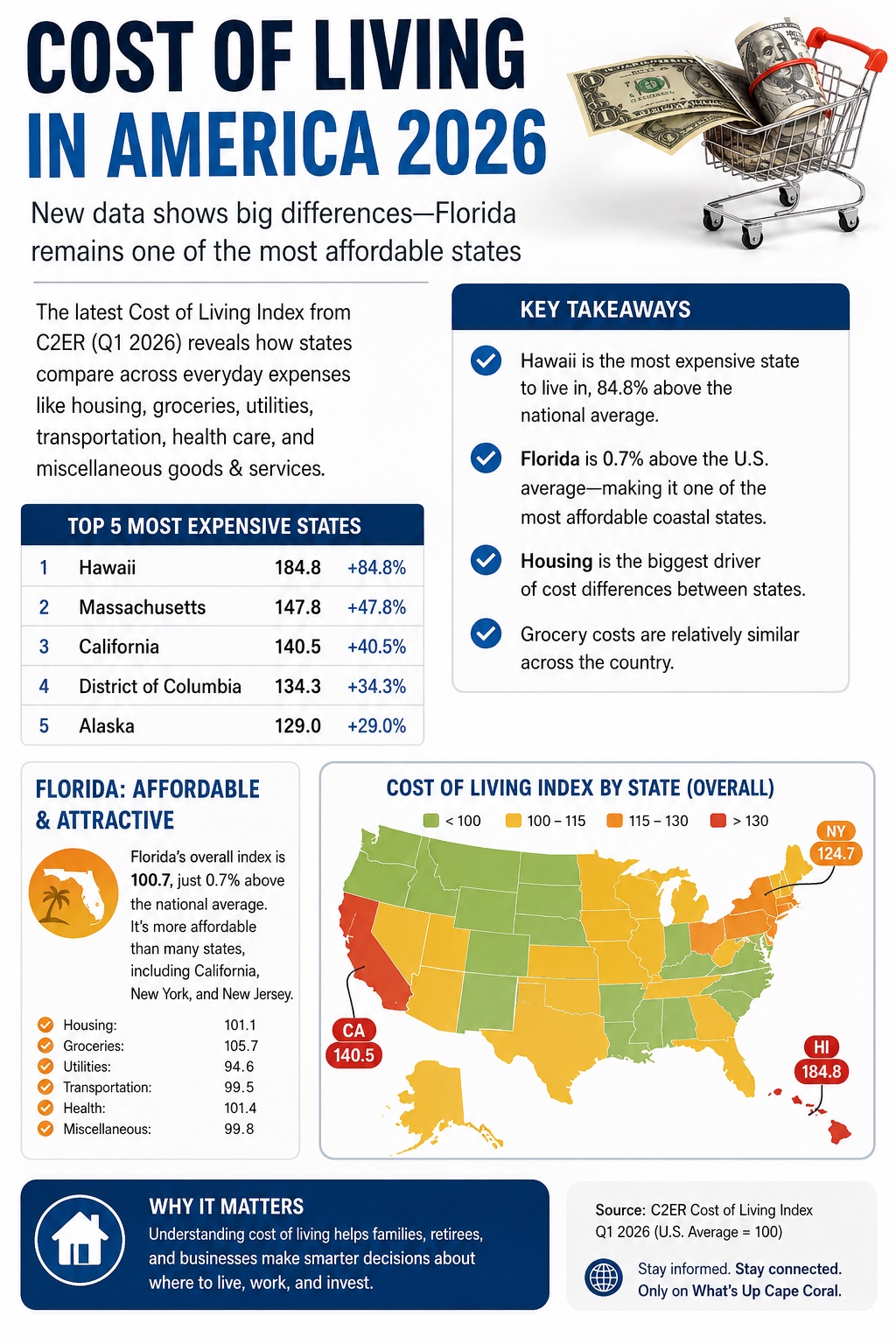
Florida’s category totals reveal more than the statewide average alone. Grocery costs register at 105.7—about 5.7% above the national benchmark and the highest of the major Florida categories shown.
That difference can feel more noticeable than the overall index because groceries are purchased every week. A statewide average also cannot capture the exact price at every Cape Coral supermarket, but it does help explain why many households feel more pressure at checkout even when Florida’s total cost of living looks nearly average.
Where Florida costs less—and more
What this means for Cape Coral
For Cape Coral families, retirees and newcomers, the statewide numbers are a useful starting point—not a complete local budget. Housing, homeowners insurance, property taxes and utility bills can vary substantially by home and neighborhood. The practical takeaway is that Florida remains close to average overall, while food costs deserve extra attention in a household budget.
About the data: The figures shown are from the C2ER Cost of Living Index, reported through the Missouri Economic Research and Information Center (MERIC), for the first quarter of 2026. The index compares relative prices in participating urban areas and uses 100 as the national benchmark.